
The decoder runs in your browser. If nothing happens when you press Agree & decode, check that JavaScript is on, or ask me and I'll read it for you.
Fret Almanac
Fender serial number lookup
Since 2010 most US-made Fenders carry US and eight digits on the headstock, Mexican ones MX and Japanese ones JD, and in each the first two digits are the year. Older Fenders are looser: from 1954 to 1976 the number on the neck plate fits a window of a year or more, and from 1976 the decal's letter (S, E, N, Z) names the decade with a year digit after it, each prefix carrying over into the next year. The decoder shows that window and the country, and on an older guitar the date on the neck heel narrows it further.
Guitars I have for sale
Fender guitars in stock now
Every one is picked, played and dialed in by me before it's listed.
-
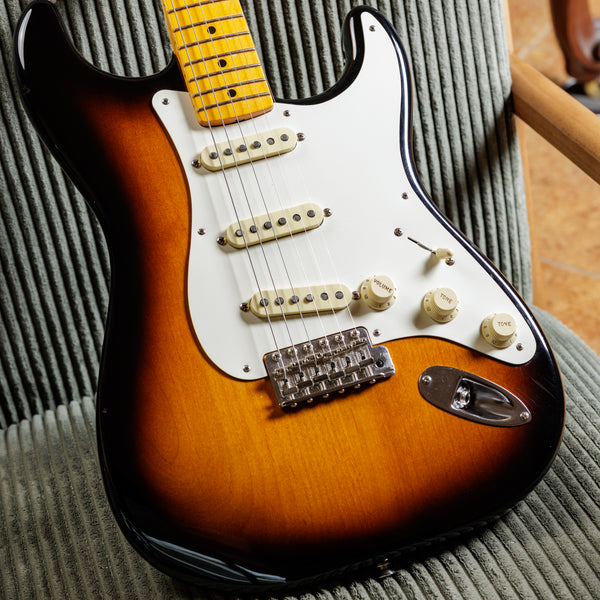 Very Good
Fender American Vintage II '57 Stratocaster 2022
2-Color Sunburst
Direct price $1,280My Reverb listing $1,350
-
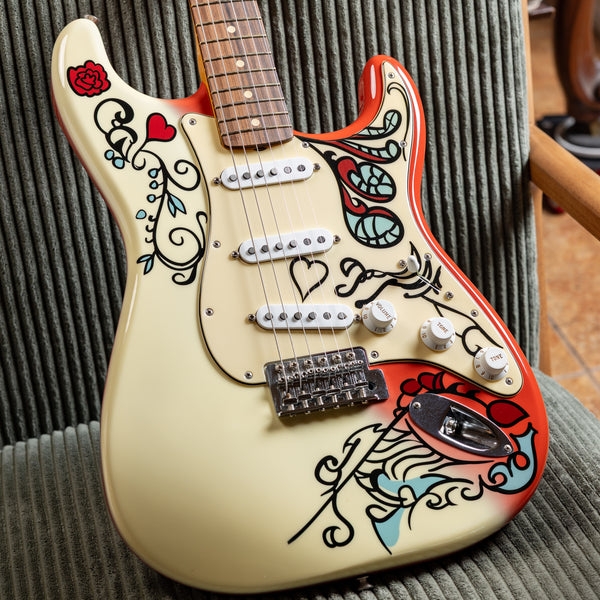 Excellent
Fender Jimi Hendrix Artist Series Signature Monterey Stratocaster 2017
Monterey Graphic
Direct price $1,420My Reverb listing $1,495
-
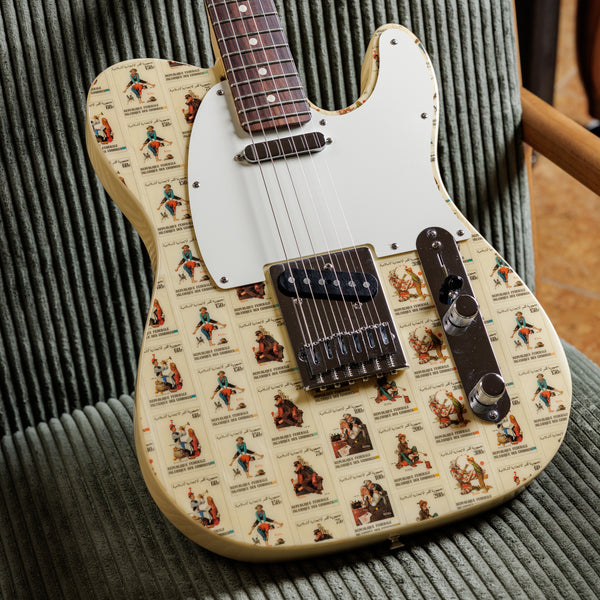 Excellent
Fender Custom Shop Stamp Collection Telecaster
Union of the Comoros
Direct price $2,325My Reverb listing $2,450
Selling?
Thinking of letting it go?
I buy Fender guitars. Tell me about yours and I'll make you a cash offer.
Get a cash offerI buy guitars as well as sell them. A decoder result is only an estimate, and it's never the basis of my offer. I judge the guitar itself: what it is, its condition and originality, and today's market.
Ask me
Not sure what you've got?
Tell me what you're looking at, and I'll help you read it.
Ask meWhere to find the serial
- The headstock decal. Most Fenders since 1976, on the front or the back of the headstock, near the line that says where it was made.
- The neck plate. From mid-1954 to 1976, stamped into the plate where the neck bolts on, and again on many reissues.
- The bridge plate or the back plate. The earliest Telecasters, Esquires, Broadcasters and Precision Basses (1950 to 1954) have it on the bridge plate, and the first Stratocasters on the back plate.
- The back of the neck, by the body. Many Japanese-made Fenders carry it there, at the neck joint.
- The certificate. Custom Shop guitars have numbers of their own, and the certificate that came with the guitar is the record of its model and date.
Fender's numbering, era by era
| Format | In use | Where to look | How sure |
|---|---|---|---|
| Bridge-plate number, 1950 to 1954Before mid-1954 the serial was stamped on the bridge plate of Esquires, Broadcasters, Telecasters and Precision Basses, and on the back plate of the first Stratocasters. Numbers up to about 6,000 cover 1950 to 1954. | 1950 to 1954 | Bridge plate; Cover plate on the back of the body | Medium |
| Neck-plate number, 1954 to 1963From mid-1954 one sequence of numbers was stamped on the neck plate of every model. Fender's chart gives each band of numbers a window of one to three years. | 1954 to 1963 | Neck plate, where the neck bolts on | High |
| L-series neck plate, 1963 to 1965An L and five digits on the neck plate, used once the plain numbers passed 99,999. Fender's chart runs the L numbers from 1963 to 1965. | 1962 to 1965 | Neck plate, where the neck bolts on | High |
| Six-digit neck plate, 1965 to 1976Six digits on the neck plate (the large F plates came in during 1965). Fender's chart gives each hundred-thousand band a window that overlaps the next. | 1965 to 1976 | Neck plate, where the neck bolts on | High |
| Headstock decal, 1976 to 1981From 1976 the serial is on a headstock decal: 76 and five digits at first, then S plus a year digit and five digits (S6 to S9). | 1976 to 1981 | Front of the headstock; Back of the headstock | High |
| Headstock decal, 1979 to 1990E plus a year digit and five digits on the headstock decal: E0 to E4 from 1979, then E8 and E9 at the end of the decade. Fender's chart shows E4 decals in use until 1988 and lists no E5, E6 or E7. | 1979 to 1990 | Front of the headstock; Back of the headstock | High |
| Special US prefixesPrefixes Fender used for particular models, markets and special runs: the early-1980s gold and walnut models (CA, CB, CC, CD, CE, CO, GO), export runs (H, I, K, FN, EE), and series such as Collectors (C), Tribute (T or TN) and the California Series (AMXN). | 1980 to today | Front of the headstock; Back of the headstock; Neck plate, where the neck bolts on | High |
| '52 Telecaster reissue bridge plateThe US '52 Telecaster reissue has its number stamped in the bridge plate like the originals: four digits from 1982 to 1988, five digits from 1988 on. | 1982 to today | Bridge plate | High |
| JV serial, 1982 to 1984JV and five digits on the first Japanese-made Fender and Squier guitars, from 1982 to 1984. | 1982 to 1984 | Back of the neck, near where it meets the body; Back of the headstock; Neck plate, where the neck bolts on | High |
| Vintage-series V numberV plus four to six digits on the neck plates of the US Vintage reissues, from 1982. The number doesn't encode the year; Fender says only the neck date does. | 1982 to 2017 | Neck plate, where the neck bolts on | Medium |
| Japanese letter serial, 1984 to 2012A letter and six digits (N and five digits in 1995 and 1996) on Japanese-made guitars. The letter gives a window of a year or two, but the same letter repeats across the Made in Japan and Crafted in Japan eras, so the decal wording decides which. | 1984 to 2012 | Back of the neck, near where it meets the body; Back of the headstock; Neck plate, where the neck bolts on | High |
| Fender Custom Shop serialCustom Shop guitars use their own number pools (CZ, CN, R and V among them) that don't encode a year. The Custom Shop certificate is the record of the model and date. | 1987 to today | Back of the headstock; Neck plate, where the neck bolts on; Cover plate on the back of the body; Only on the paperwork that came with it | Medium |
| Korean plain-number serial, 1988 to 1998Six, seven or eight digits with no prefix, on Korean-made guitars until about 1996 (some to 1998). The first digit is the year, or the first two on eight-digit numbers. | 1988 to 1998 | Back of the headstock; Front of the headstock | Medium |
| Signature series decal (SE, SN, SZ)Signature models put an S before the decade letter: SE8 is 1988, SN0 is 1990, SZ0 is 2000, and so on, each followed by five digits. | 1988 to 2009 | Front of the headstock; Back of the headstock | High |
| 35th Anniversary Stratocaster numberA three-digit number counting the 500 35th Anniversary Stratocasters made in 1989 and 1990. | 1989 to 1990 | Neck plate, where the neck bolts on; Back of the headstock; Back of the body | High |
| Korean CN and VN serials, 1990 to 1997CN or VN, a year digit and five more digits on Korean-made guitars: CN0 and VN0 are 1990 to 1991, up to CN6 and VN6 for 1996 to 1997. | 1990 to 1997 | Back of the headstock; Front of the headstock | Medium |
| Mexico artist-model serial (MSN, MSZ)MSN or MSZ and six or seven digits on some Mexican-made artist models. Fender lists which models used them but not how to date the numbers. | 1990 to 2010 | Front of the headstock; Back of the headstock | Medium |
| Mexico MN and MZ serials, 1990 to 2010MN plus a year digit (the 1990s) or MZ plus a year digit (the 2000s), then five or six digits, on Mexican-made guitars. Each prefix covers that year and the next. | 1990 to 2010 | Front of the headstock; Back of the headstock | High |
| N decal, 1990 to 2000N plus a year digit and five or six digits on US headstocks in the 1990s. Each prefix spans about two years, and some N9 decals meant for 1999 went onto 1990 guitars. | 1990 to 2000 | Front of the headstock; Back of the headstock | High |
| Korean KC serial, 1997 onKC, then eight digits whose first two are the year (KC97 is 1997) and six for the unit, on guitars made at Cort in Korea. | 1997 to today | Back of the headstock; Front of the headstock | High |
| American Deluxe decal (DN, DZ)American Deluxe models add a D in front of the decade letter: DN plus six digits in 1998 and 1999, then DZ plus a year digit through 2009. | 1998 to 2009 | Front of the headstock; Back of the headstock | High |
| Z decal, 2000 to 2009Z plus a year digit and five or six digits on US headstocks from 2000 to 2009, each prefix carrying over into the next year. | 2000 to 2009 | Front of the headstock; Back of the headstock | High |
| XN number, 2004 to 2009XN plus a year digit and four digits, for factory special runs and '52 Telecasters from 2004 to 2009. Fender says XN usually lives only in its database, not on the guitar. | 2004 to 2009 | Only on the paperwork that came with it; Back of the headstock | High |
| Indonesian IC and ICF serials, 2008 onIC (Indonesia, Cort) or, from mid-2009, ICF (Fender-branded), then eight digits whose first two are the year, on Fender-branded guitars made in Indonesia. | 2008 to today | Back of the headstock | High |
| “10” number, late 2009 to early 2010For a few months around the start of 2010, US and Mexican decals carried 10, a space, then seven digits. The number doesn't say the country; the Made in line does. | 2009 to 2010 | Front of the headstock; Back of the headstock | High |
| Mexico MX plus year, 2010 onMX, then eight digits: the first two are the year (MX10 is 2010) and the last six a unit number that isn't in order. Most Mexican-made Fenders since 2010 use it. | 2010 to today | Front of the headstock; Back of the headstock | High |
| US plus year, 2010 onUS, then eight digits: the first two are the year (US10 is 2010) and the last six a unit number that is not in order and carries no other information. Most US-made Fenders since about March 2010 use it. A longer form with a seven-digit unit, seen on a special run, is read the same way but graded low, since Fender hasn't documented it. | 2010 to today | Front of the headstock; Back of the headstock | High |
| JD plus year, 2012 onJD, then eight digits whose first two are the year (JD12 is 2012), on Japanese-made Fenders since 2012. | 2012 to today | Back of the neck, near where it meets the body; Back of the headstock | High |
What trips people up
- A serial gives a window, not a date. Fender's own chart gives most numbers a year or more, and the prefixes overlap: some N9 decals meant for 1999 went onto 1990 guitars. Fender says the date on the neck heel is the way to narrow it, which means taking the neck off.
- The same letter twice. Japanese letter serials repeat between the Made in Japan and Crafted in Japan eras, so the wording on the decal decides which one you have.
- Reissues. The V numbers on the US Vintage reissues don't carry a year at all; Fender says only the neck date does. The '52 Telecaster reissue has its number in the bridge plate, like the originals.
- The Custom Shop. Custom Shop numbers come from pools that don't encode a year. The certificate does.
- A serial never proves a guitar is genuine. Counterfeiters copy real numbers. A clean decode means the number fits a pattern, nothing more: the neck date, the hardware, the finish and the paperwork have to agree with it.
Questions people ask
Can the serial tell me which model or series it is?
Usually not. Fender serials give a year window and the country, not whether it's a Player, a Professional or a Vintera. A few prefixes are the exception, such as D for American Deluxe and S for Signature models.
Fender's own lookup doesn't find my serial. Is that a problem?
Not by itself. Fender says its lookup covers many serials but not all, and that a missing record means nothing on its own.
My number fits two windows. Which one is right?
Answer the questions under the result: whether it's a reissue, a Custom Shop guitar, or one of the models Fender numbers differently. After that, the neck heel date is the best clue.
Where this comes from
- Fender Musical Instruments: Fender Serial Number Lookup (the maker's own page, read 2026-11-24)
- Fender Musical Instruments: How can I find out how old my instrument is if it uses an odd or non-standard serial numbering scheme? (the maker's own page, read 2026-11-24)
- Fender Musical Instruments: How can I find out when my acoustic instrument was manufactured? (the maker's own page, read 2026-11-24)
- Fender Musical Instruments: How can I find out when my American-made instrument was manufactured? (the maker's own page, read 2026-11-24)
- Fender Musical Instruments: How can I find out when my Indonesian-made instrument was manufactured? (the maker's own page, read 2026-11-24)
- Fender Musical Instruments: How can I find out when my Japanese-made instrument was manufactured? (the maker's own page, read 2026-11-24)
- Fender Musical Instruments: How can I find out when my Korean-made instrument was manufactured? (the maker's own page, read 2026-11-24)
- Fender Musical Instruments: How can I find out when my Mexican-made instrument was manufactured? (the maker's own page, read 2026-11-24)
- Fender Music Corporation, Japan: Japanese-made instrument dating (Japanese edition of the support article) (the maker's own page, read 2026-11-24)
- Fender Musical Instruments: Where can I find my serial number? (the maker's own page, read 2026-11-24)
- blotnik.net: Decoding Fender Custom Shop serial numbers: what they tell you and what they don't (collectors' knowledge, read 2026-11-24)
- Wikipedia: Fender (company) (a reference guide, read 2026-11-24)
- Joe's Vintage Guitars: Fender guitars serial number guide (a reference guide, read 2026-11-24)
- Wikipedia: Fender Japan (a reference guide, read 2026-11-24)
- fenderusada blog: Fender Japan serial number chart (collector blog) (collectors' knowledge, read 2026-11-24)
- Reverb: How to Date a Fender (a reference guide, read 2026-11-24)
Last reviewed on November 25, 2026 by Shan, Aeonic Frets. If a serial reads wrong, tell me and I'll check it against the guitar's other clues.