
The decoder runs in your browser. If nothing happens when you press Agree & decode, check that JavaScript is on, or ask me and I'll read it for you.
Fret Almanac
Gibson serial number lookup
Since 1977 most Gibson USA guitars carry an eight- or nine-digit number pressed into the back of the headstock: the first and fifth digits are the year, the three digits after the first are the day of the year, and the rest count that day's production. Older and Custom Shop Gibsons are harder, because 1960s numbers were reused across several years and reissue numbers leave out the decade, so the decoder shows each year the published patterns allow and asks the questions that settle it.
Guitars I have for sale
Gibson guitars in stock now
Every one is picked, played and dialed in by me before it's listed.
-
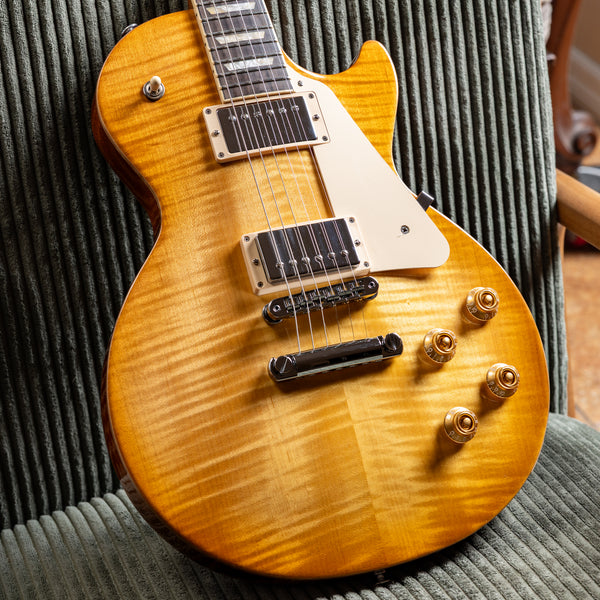 Very Good
Gibson Les Paul Studio Session 2024
Honey Burst
Direct price $1,445My Reverb listing $1,525
-
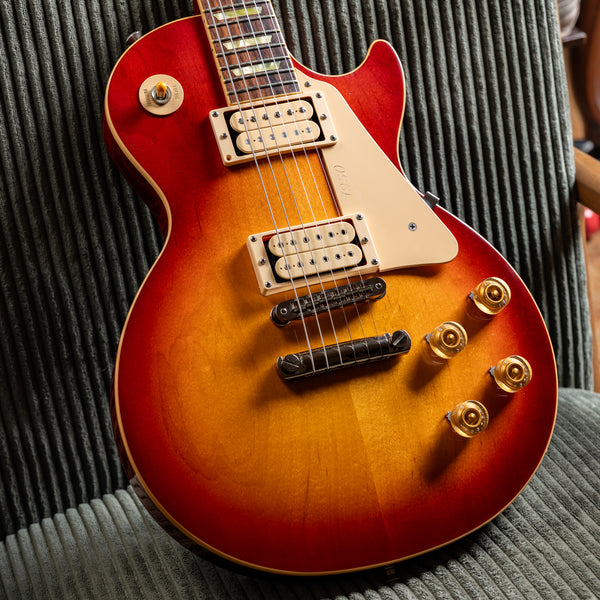 Very Good
LIGHTWEIGHT Gibson Les Paul Classic 2008
Heritage Cherry Sunburst
Direct price $1,800My Reverb listing $1,895
-
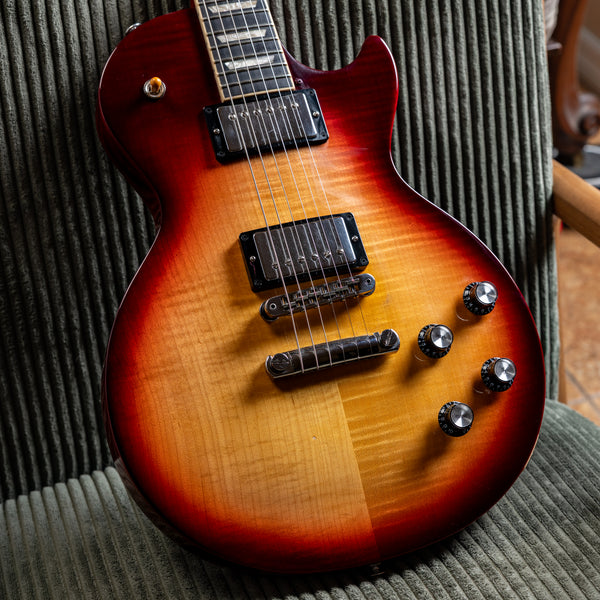 Very Good
Gibson Les Paul Studio Session 2024
Bourbon Burst
Direct price $1,325My Reverb listing $1,395
Selling?
Thinking of letting it go?
I buy Gibson guitars. Tell me about yours and I'll make you a cash offer.
Get a cash offerI buy guitars as well as sell them. A decoder result is only an estimate, and it's never the basis of my offer. I judge the guitar itself: what it is, its condition and originality, and today's market.
Ask me
Not sure what you've got?
Tell me what you're looking at, and I'll help you read it.
Ask meWhere to find the serial
- Back of the headstock, pressed into the wood. Almost every Gibson since 1961, with MADE IN USA pressed below it from about 1970.
- Back of the headstock, in ink. 1950s solid bodies, Custom Shop historic reissues and Les Paul Classics.
- A label inside the body. Hollow bodies, semi-hollows and flat-tops, read through the f-hole or the soundhole. Older labels carry a number of their own.
- Stamped inside the body. Factory order numbers on many hollow bodies and flat-tops from 1935 to 1961, usually on the inside of the back.
Gibson's numbering, era by era
| Format | In use | Where to look | How sure |
|---|---|---|---|
| Factory order number without a letter, 1902 to 1951Plain or hyphenated batch numbers inside the body. They were reused across eras, so a number gives several possible years; the headstock lettering narrows it. | 1902 to 1951 | Neck block inside the body; Stamped on the wood inside the body; Back of the body | Low |
| Label serial, 1902 to 1947A number on the white paper label inside the body, issued roughly in order from 1902 until 99999 was reached in April 1947. | 1902 to 1947 | Label inside the body, seen through the soundhole or f-hole | Medium |
| Factory order number, 1935 to 1942Batch numbers with a year letter: A, B or C between the batch and its place (1935 to 1937), D to H in front (1938 to 1942), or G and H after (1941 and 1942). | 1935 to 1942 | Neck block inside the body; Stamped on the wood inside the body; Back of the headstock | Medium |
| A-series label serial, 1947 to 1961“A” and a number on the label inside Gibson's better hollow bodies and flat-tops, from A-100 in 1947 to A-36147 in 1961. | 1947 to 1961 | Label inside the body, seen through the soundhole or f-hole | Medium |
| Factory order number, 1952 to 1961A batch number inside the body: a year letter running backwards from Z in 1952 to Q in 1961, then a four-digit batch and the place in the batch. | 1952 to 1961 | Neck block inside the body; Stamped on the wood inside the body | Medium |
| Ink-stamped number, 1953 to 19611950s solid bodies: ink-stamped on the back of the headstock, the first digit is the last digit of the year and a space follows it. | 1953 to 1961 | Back of the headstock | Medium |
| Impressed number, 1961 to 1969Pressed into the back of the headstock with no MADE IN USA below. Gibson reused these numbers, so many fit several years; the readings show each one and how strongly the published tables support it. | 1961 to 1970 | Back of the headstock; Label inside the body, seen through the soundhole or f-hole | Medium |
| MADE IN USA number, 1970 to 1975Six impressed digits with MADE IN USA below, 1970 to 1975. The numbers reuse 1960s ranges, so the first digit gives a span of years rather than one year. | 1970 to 1975 | Back of the headstock | Medium |
| Decal number, 1975 to 1977Eight digits on a clear decal on the back of the headstock. Only the first two mean anything: 99 is 1975, 00 is 1976 and 06 is 1977. | 1975 to 1977 | Back of the headstock | High |
| Eight-digit date codePressed into the back of the headstock since 1977. The first and fifth digits are the year, the second to fourth the day of the year, and the last three the plant and that day's running number. | 1977 to today | Back of the headstock | High |
| 1980s reissue numberSome reissue-style solid bodies from the 1980s to 1992 carry an ink-stamped “d dddd” whose first digit is the year made. Described by one dealer guide only. | 1980 to 1992 | Back of the headstock | Low |
| Les Paul Classic numberInk-stamped on the back of the headstock, 1989 to 2014. Before 2000 the first digit is the year (with a space after it); from 2000 the first two digits are. | 1989 to 2014 | Back of the headstock | High |
| Carved-top archtop date codeGibson Custom archtops carry the eight-digit date code on an orange label. Since 2000 the first digit is always 2, so the decade isn't encoded. | 1990 to today | Label inside the body, seen through the soundhole or f-hole | Medium |
| Custom Shop 1950s reissue numberInk-stamped “M YRRR” on Gibson Custom's 1950s reissues since late 1992: the reissued year, the last digit of the year made, then that year's count. | 1992 to today | Back of the headstock | Medium |
| Custom Shop numberInk-stamped “CS” numbers on Gibson Custom models that aren't reissues: CS, the last digit of the year made, then a four-digit count for that year. | 1993 to today | Back of the headstock | Medium |
| 1994 centennial numberUsed on many 1994 instruments: “94” and a six-digit number counting that whole year, with no day. | 1994 | Back of the headstock | High |
| Custom Shop Historic ES number, 1995 formOn the label of Gibson Custom's Historic ES reissues from 1995: A or B, a model code, the last digit of the year made, then that year's count. | 1995 to 2019 | Label inside the body, seen through the soundhole or f-hole | Medium |
| Artist or limited model numberGibson Custom's artist and limited models use their own prefixes (PAGE, DB, SL and others) and count within the run, so the number holds no date. | 1996 to today | Back of the headstock | Medium |
| Custom Shop 1960s reissue number, 1997 layoutImpressed on Gibson Custom's 1960s reissues from 1997: two digits of year, the place in that year, then a model code. | 1997 to 2020 | Back of the headstock | Medium |
| Nine-digit date codeGibson USA's format from July 2005 to 2014 and again since mid-2019: the eight-digit date code with a batch digit before the last three. | 2005 to today | Back of the headstock | High |
| Custom Shop Historic ES number, current formGibson Custom's current ES reissue numbers: A8 or A9, the last digit of the year made and a four-digit count on the label; or 1, the year digit and a count for 1961 and 1964 ES models. | 2010 to today | Label inside the body, seen through the soundhole or f-hole; Back of the headstock | Medium |
| Model-year numberGibson USA, 2014 to mid-2019: the first two digits are the model year and the other seven the production number within it. No day is encoded. | 2014 to 2019 | Back of the headstock | High |
| Custom Shop 1960s reissue number, current layoutGibson Custom's current layout for 1960s reissues: one digit of year, a four-digit place in that year, then the last digit of the reissued year. | 2020 to today | Back of the headstock | Medium |
What trips people up
- The 1960s reuse. From 1961 to 1969 Gibson pressed six-digit numbers out of order and reused whole blocks, and the same shapes come back from 1970 to 1975 with MADE IN USA underneath. A plain six-digit number can mean three or four different years. Whether MADE IN USA is pressed under it is the best single clue.
- Reissues and Custom Shop. Historic reissues carry the reissued model's year and only the last digit of the year they were made, so 7 5123 fits 1995, 2005, 2015 and 2025 alike. The paperwork that came with the guitar settles it.
- Model-year numbers, 2014 to 2019. For those years the first two digits are the model year, not the build date, and a 2015 model may have been built in late 2014.
- The Les Paul Classic and some limited runs use an ink-stamped number whose first two digits are the year, instead of the date code.
- A serial never proves a guitar is genuine. Counterfeiters copy real numbers. A clean decode means the number fits a pattern, nothing more: the hardware, the pots, the finish and the paperwork have to agree with it.
Questions people ask
Can the serial tell me the exact model?
Usually not. Gibson's date codes give the year, the day and the plant, not the model. Some Custom Shop numbers are the exception, because they carry the year of the model being reissued.
My number fits several years. Which one is right?
Answer the questions under the result. Whether MADE IN USA is pressed under the number, how the number is put on and where it sits usually narrow a 1960s or 1970s Gibson to one span. After that, the dates on the original pots are the next best clue.
The decoder says no format fits. Is my guitar fake?
Not necessarily. Most of the time it's a misread character on a worn stamp, a second number somewhere else on the guitar, a replacement neck, or a limited run Gibson never documented. Check each digit again, then ask me.
Where this comes from
- Gibson Brands: Gibson Help Center FAQs (the maker's own page, read 2026-11-24)
- Gibson Brands: Gibson Serial Numbers: How to Read Gibson Serial Numbers (the maker's own page, read 2026-11-24)
- Wikipedia: Gibson Brands (a reference guide, read 2026-11-24)
- Tone Wolf: Gibson Guitar Serial Numbers by Year (a reference guide, read 2026-11-24)
- Kansas City Vintage Guitars: Gibson Serial Number Dates (a reference guide, read 2026-11-24)
- True Vintage Guitar: Gibson Serial Number Lookup (a reference guide, read 2026-11-24)
- Mahar's Vintage Guitars: Gibson Serial Number Lookup guide (a reference guide, read 2026-11-24)
- Gibson Brands, via the Internet Archive: Serial Number Search (archived copy, 20 July 2012) (an archived copy of the maker's page, read 2026-11-24)
- Gibson Brands, via the Internet Archive: Serial Number Search (archived copy, 3 May 2019) (an archived copy of the maker's page, read 2026-11-24)
- Carter Vintage Guitars: What Year is My Gibson Guitar? (a reference guide, read 2026-11-24)
Last reviewed on November 25, 2026 by Shan, Aeonic Frets. If a serial reads wrong, tell me and I'll check it against the guitar's other clues.